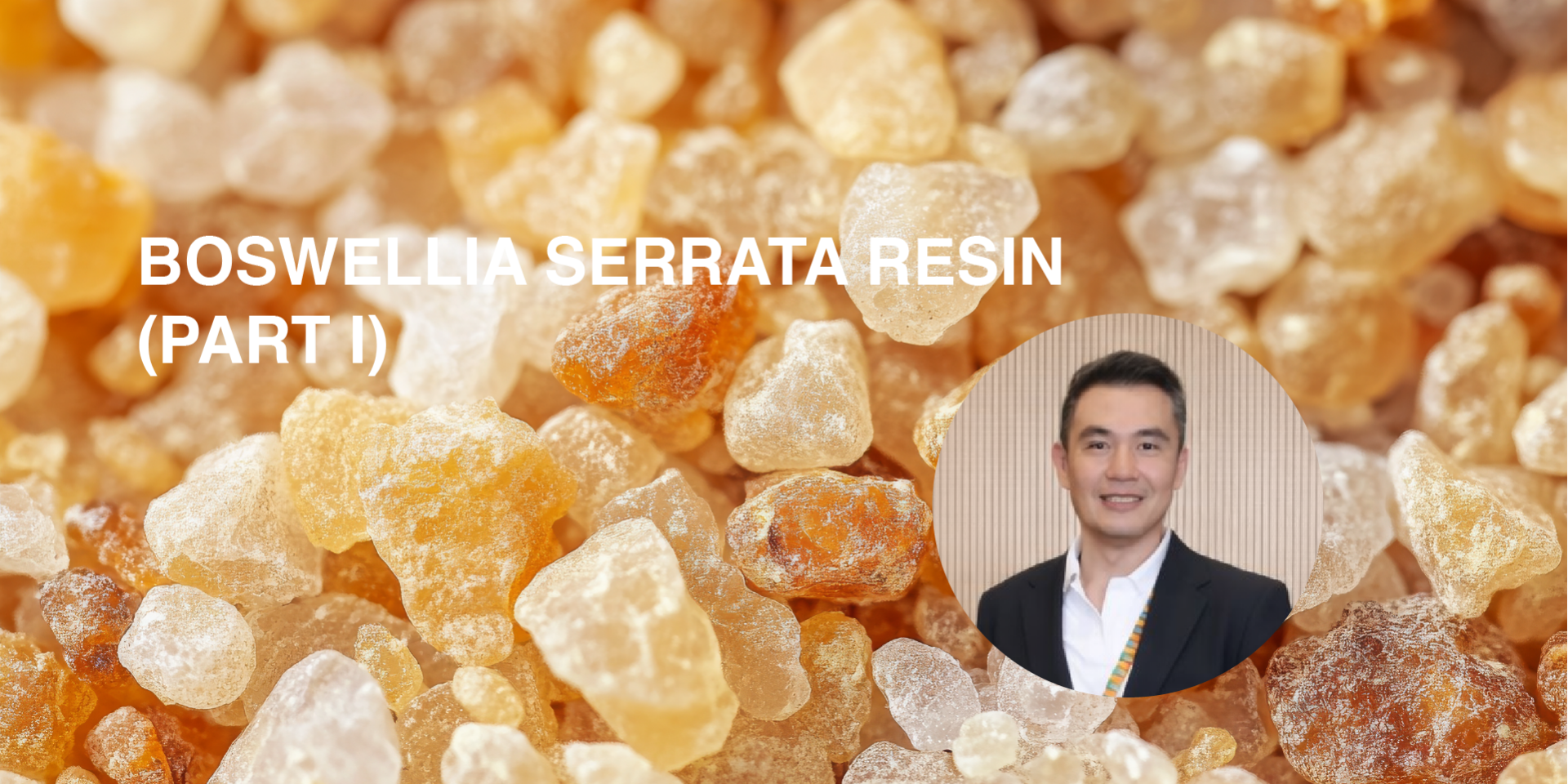
For centuries, Boswellia serrata, or commonly known as Indian frankincense, has been treasured in traditional medicine throughout the Indian subcontinent for its ability to calm chronic inflammation. Its aromatic resin was applied topically and taken orally long before modern laboratories could explain why and how it worked.
Today, science has caught up.
The Science Behind the Resin
The therapeutic strength of Boswellia lies in its active constituents known as boswellic acids (BAs), a pentacyclic triterpenes including:
- β-boswellic acid
- KBA (11-keto-β-boswellic acid)
- AKBA (3-acetyl-11-keto-β-boswellic acid)
These compounds are now well-recognised for their powerful anti-inflammatory properties, validated through biochemical and molecular studies. Amongst, AKBA is known as the most potent fraction in the resin.
Why This Matters in Dermatology?
Inflammation is not just a symptom. We know it is the driving force behind many dermatological concerns such as:
- Sensitive skin
- Acne and post-inflammatory erythema
- Eczema
- Rosacea
- Post-Inflammatory Hyperpigmentation or Melasma
- Barrier impairment
When inflammatory pathways remain persistently activated, the result is redness, swelling, discomfort, and compromised skin resilience.
This, in modern dermatological science, controlling inflammation is not optional; it is strategic.
Targeting the Enzymes That Fuel Inflammation
Boswellia serrata gum extract works at the biochemical root of inflammation by inhibiting two critical enzymes:
- 5-Lipoxygenase (5-LOX) reduces leukotriene synthesis
- Cyclooxygenase-2 (COX-2) reduces prostaglandin E2 (PGE2) production
AKBA acts as a potent 5-LOX inhibitor, while KBA selectively inhibits COX-2. By modulating these pathways, Boswellia interrupts the inflammatory cascade at its source rather than merely masking symptoms.
Beyond Enzyme Inhibition: Regulating Cellular Signaling
Boswellia’s role extends deeper into intracellular inflammatory signaling:
- Downregulation of NF-κB, the master regulator of pro-inflammatory cytokines (TNF-α, IL-1β, IL-6)
- Inhibition of MAPK pathways (p38, ERK1/2, JNK), which amplify inflammatory responses
This multi-level modulation positions Boswellia not simply as a botanical extract, but as a mechanism-oriented intervention aligned with modern skin science.
Bridging Traditional Wisdom and Evidence-Based Innovation
What makes Boswellia serrata particularly compelling in topical dermatology is its multi-targeted approach; enzyme inhibition combined with transcriptional regulation.
As dermatological research increasingly focuses on mechanism-driven and evidence-supported solutions, Boswellia stands out as a rare example of traditional wisdom validated by molecular science.
Ancient resin.
Modern mechanism.
A bridge between heritage and innovation.
Why It Matters to smith-meyerlab?
At smith-meyerlab, ingredient selection is never trend-driven; it is evidence-driven.
We incorporate standardised Boswellia serrata gum extract with defined boswellic acid content into our formulations to ensure both consistency and efficacy.
One example is our RES-Q Recovery Milk Serum, developed to support inflamed and sensitised skin by targeting inflammatory pathways at their core.
We are also excited to introduce our upcoming launch: RES-Q CalmSkin Body & Scalp Cleansing Milk
Formulated for:
- Sensitive skin
- Dry skin
- Eczema-prone skin
- Reactive scalp conditions
This new addition reflects our continued commitment to translating scientific mechanisms into clinically meaningful skincare solutions.
Stay connected with us as we continue advancing evidence-based cosmeceutical innovation.